Why People Are Often the Entry Point for Cyberattacks
Cybersecurity investments in many organizations generally focus on devices, networks, and systems. Technical protection is indeed important, but cybercriminals often take the easy way out—convincing people within the organization to open the door for them. This approach is known as social engineering. Because it targets human habits and judgment, this type of attack can succeed even if the systems in place are well-organized. Understanding how it works is a realistic first step for companies, executives, and individuals alike.
Psychological Manipulation Without Hacking the System
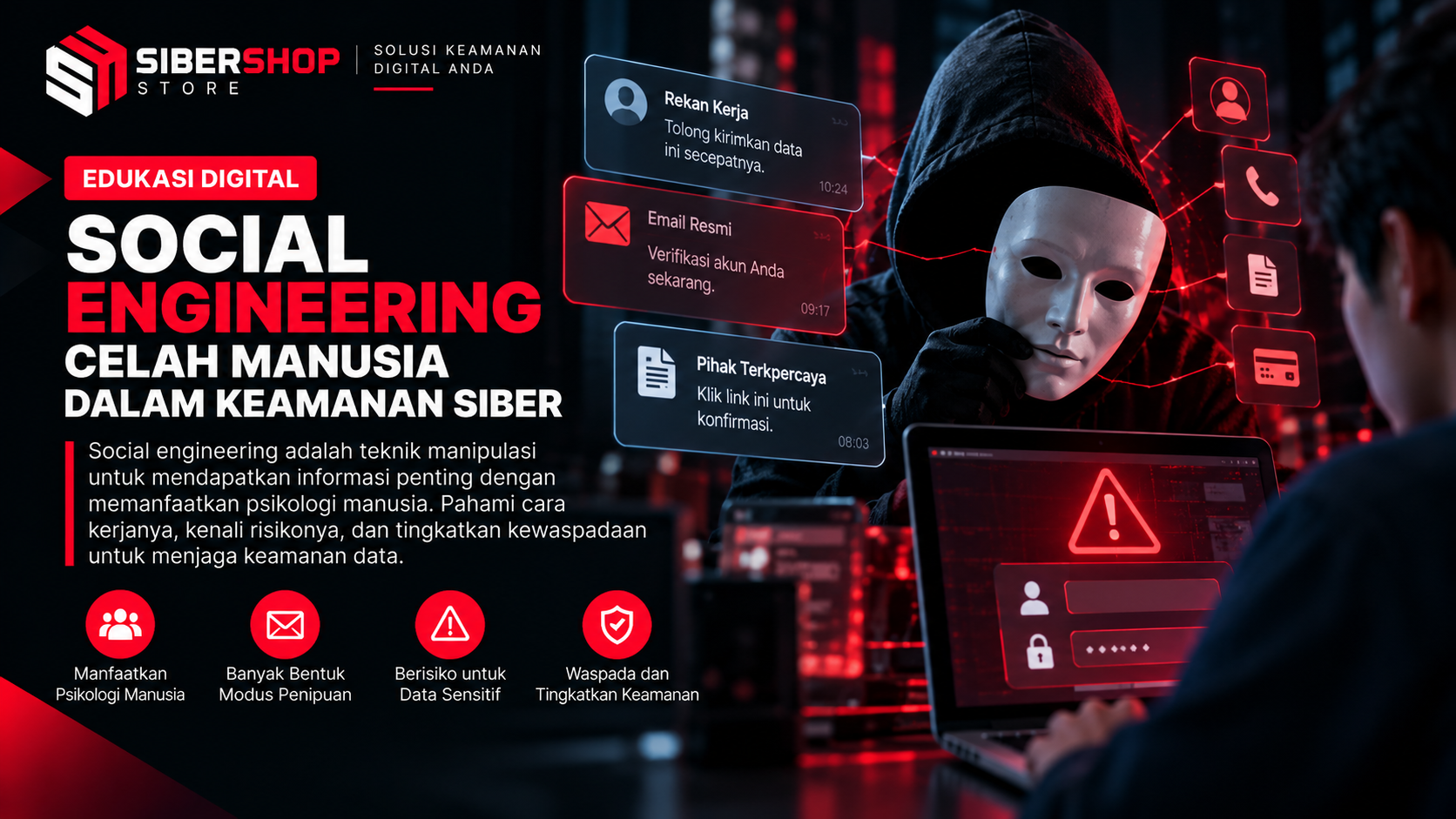
Social engineering is a set of psychological manipulation techniques that cause victims to voluntarily hand over access, information, or consent. Attackers do not need to find vulnerabilities in software or crack passwords with specialized tools. A single convincing conversation is enough for a victim to provide a verification code, open a link, or approve a request that seems reasonable. It is this voluntary nature that makes this type of attack difficult for automated systems to detect, as the victim’s actions are recorded as legitimate user activity.
These attacks take various forms, ranging from text messages, emails, and phone calls to conversations on messaging apps that impersonate coworkers or supervisors. Attackers typically pose as trustworthy parties, such as finance department staff, vendors, service representatives, or company executives. In many cases, victims only realize something is amiss after the action has been taken and access has already been compromised. Therefore, discussions about social engineering cannot be limited to technical matters alone but must also address workplace culture and how people make decisions.
Trust, Urgency, Authority, and Fear
There are four psychological triggers that perpetrators most frequently exploit. Trust is built through a sense of familiarity, for example, by mentioning a coworker’s name or an ongoing project. Urgency is created by setting tight deadlines so that the victim feels they don’t have time to double-check. Authority is invoked by claiming to speak on behalf of a supervisor, an organization, or an official body, while fear is instilled through threats of account suspension, fines, or legal trouble.
Many people assume that victims of social engineering are those who lack technical knowledge. In reality, even experienced employees and executives who are familiar with digital tools can still fall victim, especially when they are busy, under pressure, or receive a request that appears to come from someone they know. Attackers deliberately choose moments when the victim’s attention is divided. Technical proficiency does not automatically serve as protection, because what is being targeted are the social instincts that everyone possesses—namely, the desire to help, to obey superiors, and to avoid trouble.
Personal Data as Raw Material for Scenarios
Manipulation is far more convincing when the perpetrator includes accurate details. This is where personal data scattered across the internet serves as raw material. Information such as job titles, contact numbers, circles of coworkers, travel habits, and even family relationships can be woven into a scenario that appears legitimate. Messages that mention a direct supervisor by name, reference work-related matters, or claim to be from a relative in distress will seem far more plausible than generic messages.
This data doesn’t always come from major data breaches. Often, it’s gathered from social media profiles, business directories, contact lists copied by third-party apps, data-aggregation sites, and old news archives that are still easily found via search engines. Each piece of information may seem trivial on its own, but when combined, it forms a complete picture of who can be contacted, how, and on whose behalf. That is why privacy protection and cybersecurity are inseparable. The fewer details available to attackers, the harder it is for them to craft a convincing story.
Risks to Business and Reputation
For businesses, the impact of social engineering can ripple across many areas. The takeover of email accounts, social media accounts, or internal systems can occur simply because one person grants access to the wrong party. Attackers can also carry out scams in the company’s name—for example, requesting payments from partners and customers using an identity that appears official. Financial losses, operational disruptions, and the burden of handling the incident all become burdens that must be borne simultaneously.
An impact that is often realized too late is the damage to the company’s reputation following an incident. Customers and partners may question whether the company is capable of safeguarding its own data and communications. Posts, screenshots, or news coverage of the incident can linger on search engines for a long time and influence the perceptions of those who have never dealt directly with the company. Therefore, incident response should include both restoring access and managing the digital footprint that emerges afterward.
Building a Culture of Verification
Effective prevention starts with habits, not additional tools. A culture of verification means that every request involving money, access, or sensitive data is confirmed through a second, established channel—regardless of who appears to be making the request. This practice must apply at all levels, including leadership, so that no request is considered immune from scrutiny. Organizations that normalize the practice of double-checking will be harder to manipulate because attackers lose the sense of urgency that is their primary weapon.
The second step is to limit publicly accessible data. Periodic reviews of personal and corporate information in circulation, as well as the deletion of data that is no longer relevant or was published without consent, will narrow the pool of material that perpetrators can exploit. The third step is to provide a clear internal reporting channel, so that employees who have suspicions or have already responded to a suspicious message can report it without fear of being blamed. Early reports give the company time to limit the impact. This approach does not guarantee complete immunity, but it significantly reduces the likelihood of a successful attack.
Contact Us
Contact Us through our official channels.