When Data Breaches Originate from Business Partners
Many companies have focused on the security of their internal systems, from password management to device restrictions. However, company data is rarely stored in just one place. It flows to vendors, agencies, application providers, and freelancers who support day-to-day operations. Each of these data flows creates third-party risks that often escape the attention of leadership. This article discusses why these risks are important, where the vulnerabilities lie, and how leadership can address them from a governance perspective.
Partners Hold Data of Equal Value
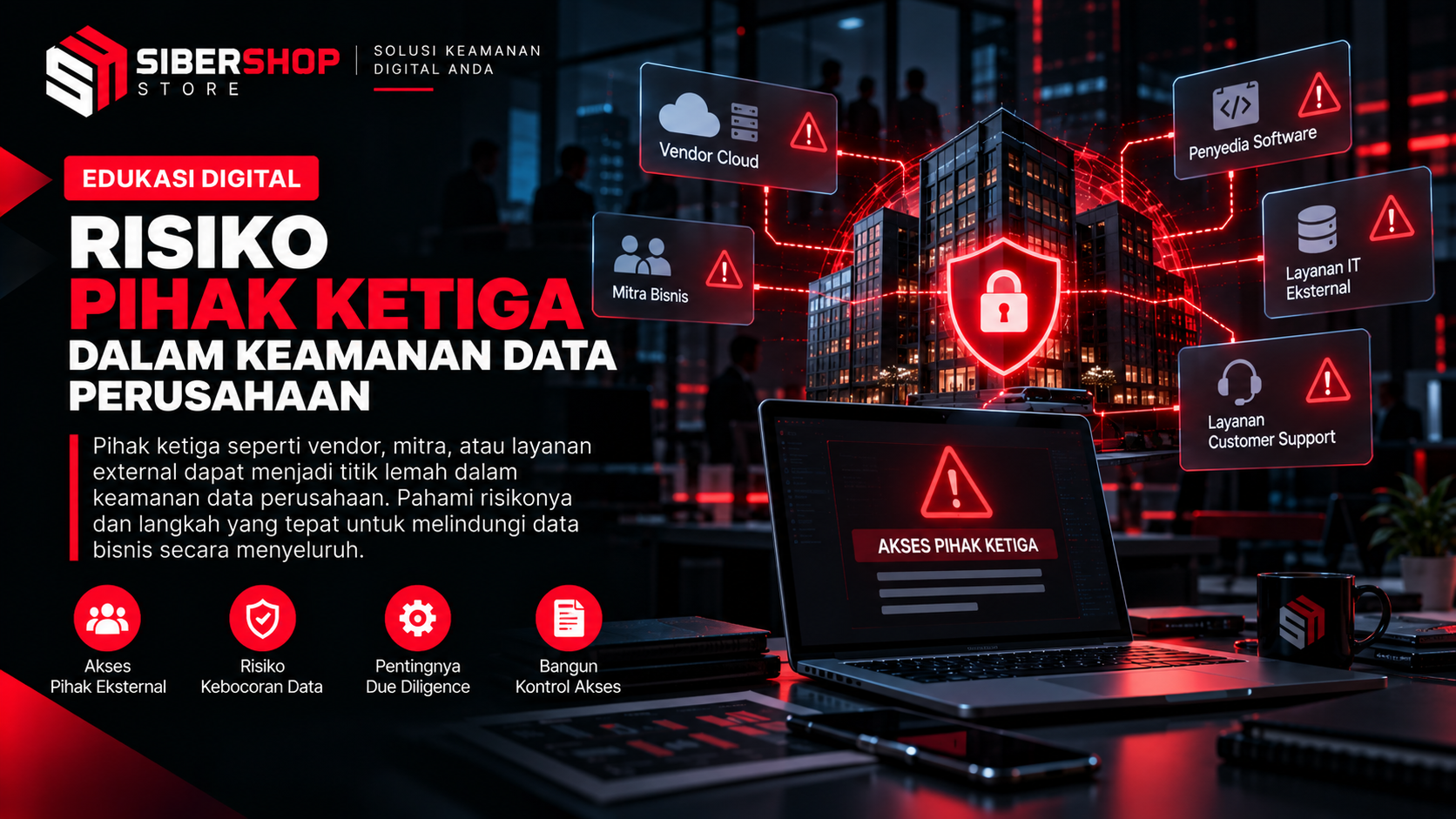
IT vendors typically have access to servers, databases, or administrative systems. Digital agencies manage social media accounts, websites, and campaign data containing customer information. Application providers store operational data on their own platforms, while freelancers often receive work files containing internal information. All of this data is just as valuable as the data stored on a company’s own systems. The difference is that companies cannot directly monitor how that data is stored, accessed, and shared by the parties receiving it.
This situation is exacerbated by the fact that each partner has different security standards. Large companies may have strict procedures, but smaller partners who work quickly often prioritize ease of access over caution. When a single partner holds access to multiple clients at once, they also become an attractive target for malicious actors. Attackers don’t need to breach a company’s robust defenses if a backdoor through a partner is easier to open. This is why data security cannot be limited to the boundaries of the company’s network alone.
Reputation Is Also at Stake in Incidents Outside the System
From the public’s perspective, there is no difference between a data breach occurring on a company’s server and one occurring on a partner’s end. Customers view their data as having been entrusted to the company, so it is the company that is held accountable. Corporate clients will question the company’s diligence in selecting business partners, and investors will assess the quality of the risk controls implemented by management. The explanation that the incident occurred on the other party’s end is rarely accepted as a sufficient defense.
The impact is immediately felt on a company’s digital reputation. News coverage, social media posts, and search results regarding the incident can linger with the company’s name for a long time. Trust built over many years can be eroded in a matter of days, while the process of restoring it takes much longer. Therefore, third-party risks should be discussed in executive boardrooms and not simply left to technical teams.
The Most Commonly Overlooked Vulnerabilities
One common vulnerability is access that isn’t revoked after a contract ends. The project is finished and the working relationship ends, but the partner’s accounts and login credentials remain active because no one is assigned to deactivate them. Access left unattended like this can be misused years later, either by the partner itself or by another party that manages to take over the account. Companies often don’t realize this until an incident has already occurred.
Another vulnerability is shared accounts used by multiple people on the partner’s side. When a single account is used by many parties, it becomes unclear who did what, and security depends on the most negligent person. There is also a tendency for partners to store client data longer and in greater quantities than necessary—for example, old project files that are never deleted. The more data stored in multiple locations, the greater the chance of a data leak. The underlying problem often lies in partnership agreements that contain no security provisions whatsoever, so the partners’ obligations are never clear from the start.
A Governance Approach for Leadership
The first step is to map out which partners hold data or have access to it, as well as the types of data they hold. Many companies are surprised when this list is compiled because the number far exceeds expectations. This mapping allows leadership to identify which partners pose high risks and require closer attention. Without this overview, security decisions are merely guesswork.
The next step is to limit access to what is necessary for the job. Partners should only be granted the access required for their tasks, for a clearly defined period, and through individual accounts. Collaboration contracts should include data security clauses, obligations to report incidents within an agreed-upon timeframe, and provisions for the return or deletion of data when the working relationship ends. Periodic reviews are necessary to ensure that the list of partners, access rights, and compliance with the clauses remain up to date. This approach does not eliminate risk entirely, but it makes the company better prepared and more accountable for the steps taken.
When Data Has Already Been Leaked Following an Incident
Not all incidents can be prevented, and there are times when harmful data or content has already circulated on the internet. At that stage, handling the situation requires professional guidance from experts who understand the official reporting channels on the platform as well as the available legal mechanisms. The process depends on each platform’s policies and the decisions of the authorities, so the success of removal cannot be guaranteed. What can be done is to organize evidence systematically, follow the appropriate channels, and maintain consistent corporate communication throughout the process.
Contact Us
Contact Us through our official channels.