When Legitimate Access Becomes a Gateway to Data Breaches
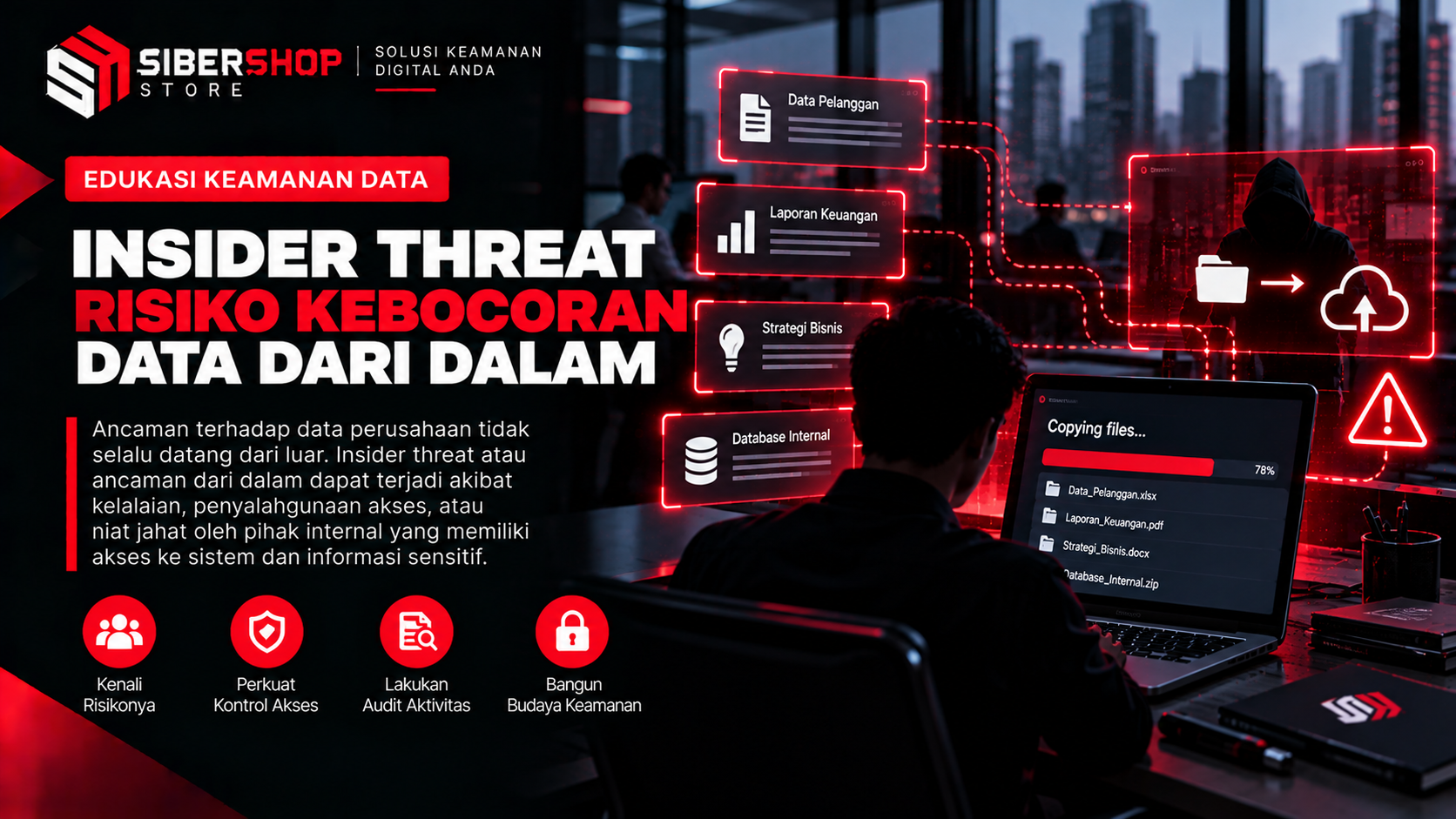
Discussions about corporate data security often focus solely on external hackers breaching defense systems. While this perspective isn’t wrong, it’s incomplete. There’s one category of risk that’s rarely discussed because it originates within the organization’s inner circle of trust: employees, former employees, and partners who still retain access. This risk is known as an insider threat. This article explores the issue from the perspective of access governance and its impact on corporate reputation.
Understanding the Three Faces of the Insider Threat
An insider threat is a security risk originating from parties with legitimate access to an organization’s systems, data, or documents. These parties can include permanent employees, contract workers, former employees whose access has not yet been revoked, as well as partners and vendors. This term does not automatically imply malicious intent, as the sources of incidents are highly varied. A clear understanding helps companies choose an appropriate response.
The first category is unintentional negligence. Examples include internal documents sent to the wrong recipient, files shared via public links, or work devices lost without being reported. The second category is intentional misuse of access, such as when someone copies client data for personal gain or takes it to a competitor. The third category involves internal accounts compromised by external parties, such as when an employee’s credentials are stolen and used as if the account owner were actively working. While these three categories differ in motive, they share one commonality: the incidents occur through a door that was already left open.
Why These Threats Are Hard to Detect
External threats typically leave telltale signs, such as repeated login attempts or unusual data traffic. Insider threats are different because their activities appear to be part of everyday work. People who open folders, download files, or access customer data do so using access granted by the company itself. Without a clear baseline for comparison, these actions do not raise suspicion.
The challenge is compounded by the fact that many organizations lack a clear understanding of what constitutes normal work patterns for each role. Without that context, deviant activity is difficult to distinguish from legitimate work requirements. In cases where an account is compromised by an external party, the perpetrator exploits the identity of a trusted employee so that their trail blends in with daily activities. As a result, incidents are often only discovered after data appears where it shouldn’t or after a third party contacts the company. By that point, reputational damage has already begun.
Vulnerabilities in Access Governance
The first vulnerability is excessive access. In practice, employees often receive broader access rights than necessary because the access granting process is designed to be fast and efficient. Over time, these access privileges accumulate and are never reviewed. The broader a person’s access, the greater the impact when that access is misused or falls into the wrong hands. This situation means that a single small mistake can escalate into a serious incident.
The second vulnerability is shared accounts. When a single account is used by multiple people, the company cannot determine who did what, making it difficult to trace actions after an incident occurs. This practice is common with official social media accounts, subscription services, and team storage folders. When a problem arises, there is no single party who can be held definitively accountable. Shared accounts also complicate the revocation of access because passwords must be changed and redistributed to all users.
The third vulnerability is access that isn’t revoked when an employee leaves or changes positions. Former employees whose accounts remain active are a gap that’s often overlooked because HR administration and access management are handled by different departments. A similar situation occurs with transferred employees, who carry over access from their previous positions. Even partners and vendors whose projects have been completed often still retain access because no one feels responsible for revoking it. Such vulnerabilities can persist for years without being noticed.
Impact on Corporate Reputation
The impact of insider threats rarely stops at data loss. When customers’ or employees’ personal data is leaked, the company faces questions about its ability to uphold trust. Internal documents such as business plans, contracts, or correspondence circulating beyond the company’s control can lead to misinterpretation and provide ammunition for parties seeking to discredit the company. Such information is easily copied and spread across various platforms, so addressing it requires time and meticulous attention.
At this stage, trust is at stake. Clients whose data has been exposed may reconsider their business relationships, partners become more cautious, and investors reassess the quality of the company’s governance. Leaks originating from within are often viewed more seriously because they create the impression that internal controls are failing. News coverage and posts about the incident can also linger for a long time on search engines, thereby influencing perceptions long after the technical issue has been resolved. These considerations are general in nature regarding digital reputation and do not constitute a promise regarding the ability to remove specific content. Therefore, reputation must be viewed as part of the risk that is managed from the outset.
Prevention Through Policies and Work Culture
Prevention starts with policies, not with devices. The principle of access restriction based on need ensures that each person has only the access relevant to their duties, and periodic reviews ensure that access remains appropriate as roles change. Personal accounts for each user maintain accountability, while activity logging helps the company understand what happened in the event of an incident. These policies must be clearly written and known to all parties with access.
A disciplined offboarding process is just as important. Revoking access should be a standard part of employee departures, transfers, and the termination of partner contracts, with clear accountability and specific timelines. The return of devices and the handover of official accounts—especially social media accounts and other company services—must be documented. Without this discipline, even the best policies will have loopholes.
The final aspect is workplace culture. Employees who understand the value of data and the consequences of negligence tend to be more cautious and more willing to report issues when they realize a mistake has been made. Security awareness training should be delivered in language relevant to day-to-day work, not just as a list of prohibitions. A work environment that avoids excessive blame encourages early reporting, and early reporting minimizes the impact. If an incident has already resulted in company data or documents being exposed to the public, the standard steps organizations typically take are to document the incident in detail, record the time and source of the discovery, and notify internal parties as well as other relevant parties as needed.
Contact Us
Contact Us through our official channels for consultations regarding access governance or incident response.