When the Face and Voice of a Leader Are No Longer Taken at Face Value
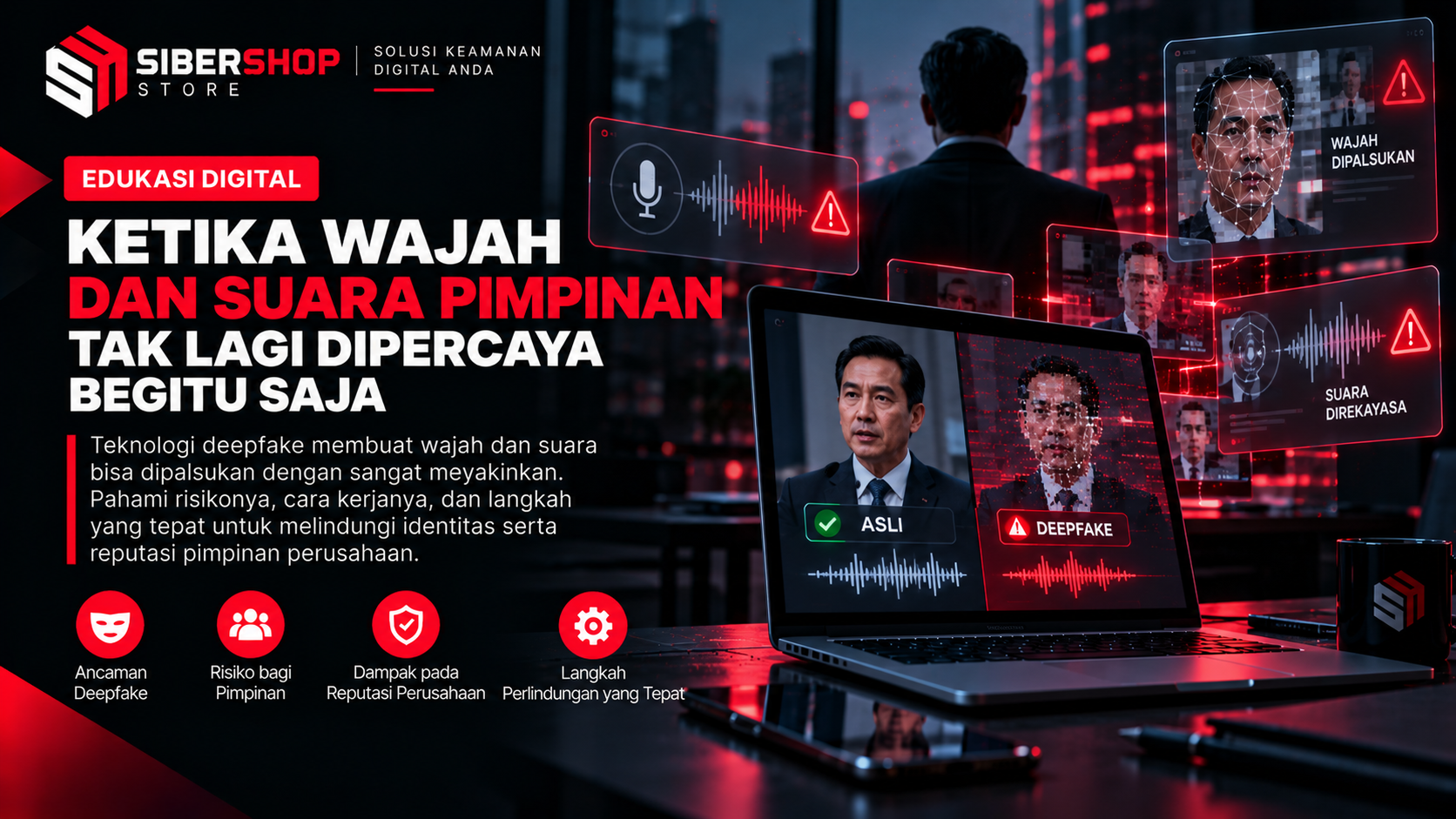
For a long time, the faces and voices of company leaders have served as a mark of authenticity that is rarely questioned. A video call from a director or a voicemail from a board member is usually immediately considered legitimate and acted upon without delay. Deepfakes are changing that assumption because synthetic technology is now capable of mimicking a person’s appearance and manner of speaking with a convincing level of similarity. The issue lies not only in the sophistication of the technology but also in the collapse of the assumption that what is seen and heard must be true. For companies, deepfakes must therefore be understood as an issue of trust and verification in communication—not merely a matter for the IT team.
Public Exposure Becomes Raw Material for Forgery
Deepfakes work by analyzing existing material—such as photos, videos, and audio recordings. Executives are attractive targets because of their high public profile, ranging from media interviews, conference speeches, webinars, and podcast episodes to posts on the company’s social media channels. The more high-quality material that circulates, the easier it is for malicious actors to create convincing fakes. This does not mean executives should disappear from the public eye, as that presence is part of leadership and reputation-building. However, companies need to realize that this same exposure now also serves as raw material for forgery. This awareness forms the basis for determining what content is appropriate to publish and what quality standards should be maintained.
Impacts Beyond Fraud
Financial fraud is indeed the most easily imaginable form of abuse, but the impact of deepfakes is far broader. Synthetic content can contain false statements that appear to come from leadership—for example, regarding policies, financial conditions, or stances on sensitive issues. Once circulated, such statements can sow doubt among clients, partners, and investors regarding the company’s official communications. More subtly, the existence of this technology means that even genuine statements can be accused of being fake by interested parties. Companies ultimately bear a double burden: proving that the fake content is indeed fake and convincing the public that their legitimate statements remain trustworthy. Credibility built up over many years can be shaken in a matter of hours.
Recognizing Patterns of Abuse and Characteristics of Synthetic Content
Risk identification should begin with patterns of misuse, not merely visual scrutiny. The most common pattern involves urgent instructions purporting to come from leadership—for example, requests to transfer funds, grant access, or disclose confidential information under the pretext of a very tight deadline. Such requests are usually accompanied by demands for confidentiality and attempts to bypass standard approval channels. In terms of content, common signs include lip movements that are out of sync with the voice, flat facial expressions, unusual imagery around the face, or stiff intonation. However, these visual and audio cues are becoming increasingly unreliable as the quality of the imitations continues to improve. Remaining vigilant about the context of a request is ultimately far more useful than simply assessing appearance.
Building Resilience Through a Culture of Verification
Organizational resilience is built primarily through a culture of multi-layered verification for every sensitive request. Requests involving funds, system access, or critical data should always be confirmed through a second, pre-established and agreed-upon channel—no matter how convincing the face or voice conveying the request may be. This culture can only thrive if leadership itself emphasizes that verification is not a sign of distrust, but rather a standard procedure that applies to everyone. Employees need to feel safe to ask questions and delay action without fear of being seen as hindering work.
Other supportive measures include limiting the exposure of executives’ personal material—for example, by reviewing old posts, adjusting account privacy settings, and cleaning up archives of recordings that do not need to be publicly accessible. Companies should also prepare supporting documentation from the outset, including the practice of saving screenshots, links, timestamps of findings, and copies of suspicious communications. Well-organized evidence from day one speeds up the reporting process and strengthens the company’s position should the matter proceed to legal action. It is far more effective to make these preparations before a crisis occurs rather than scrambling to put them together when pressure is at its peak.
Handling Synthetic Content That Has Already Circulated
If synthetic content is already circulating, the response must proceed on two tracks. The first track involves reporting through the official mechanisms of the platform where the content is posted, citing their policies regarding manipulative media, impersonation, or misuse of personal images. The second track is legal action appropriate to the nature of the violation, and determining the appropriate course of action requires a review of the facts and evidence in each case in consultation with qualified legal counsel. Professional guidance helps companies choose the appropriate track, prepare comprehensive reports, and maintain consistent public communication throughout the process. The decision to remove content ultimately rests with the platform and the relevant authorities, so no one can guarantee the outcome. Therefore, Siber Group makes every effort through both the platform’s official channels and legal avenues in every case, while refraining from promising specific results. What we can assure you is that every step is taken correctly and at the right time.
Contact Us
Siber Group provides assistance with handling synthetic content through platform reporting channels and legal channels, ranging from report preparation to coordination of the resolution process. Companies facing deepfake content featuring their executives can contact Siber Group via the official contact page at sibershopstore.com to consult on such cases.