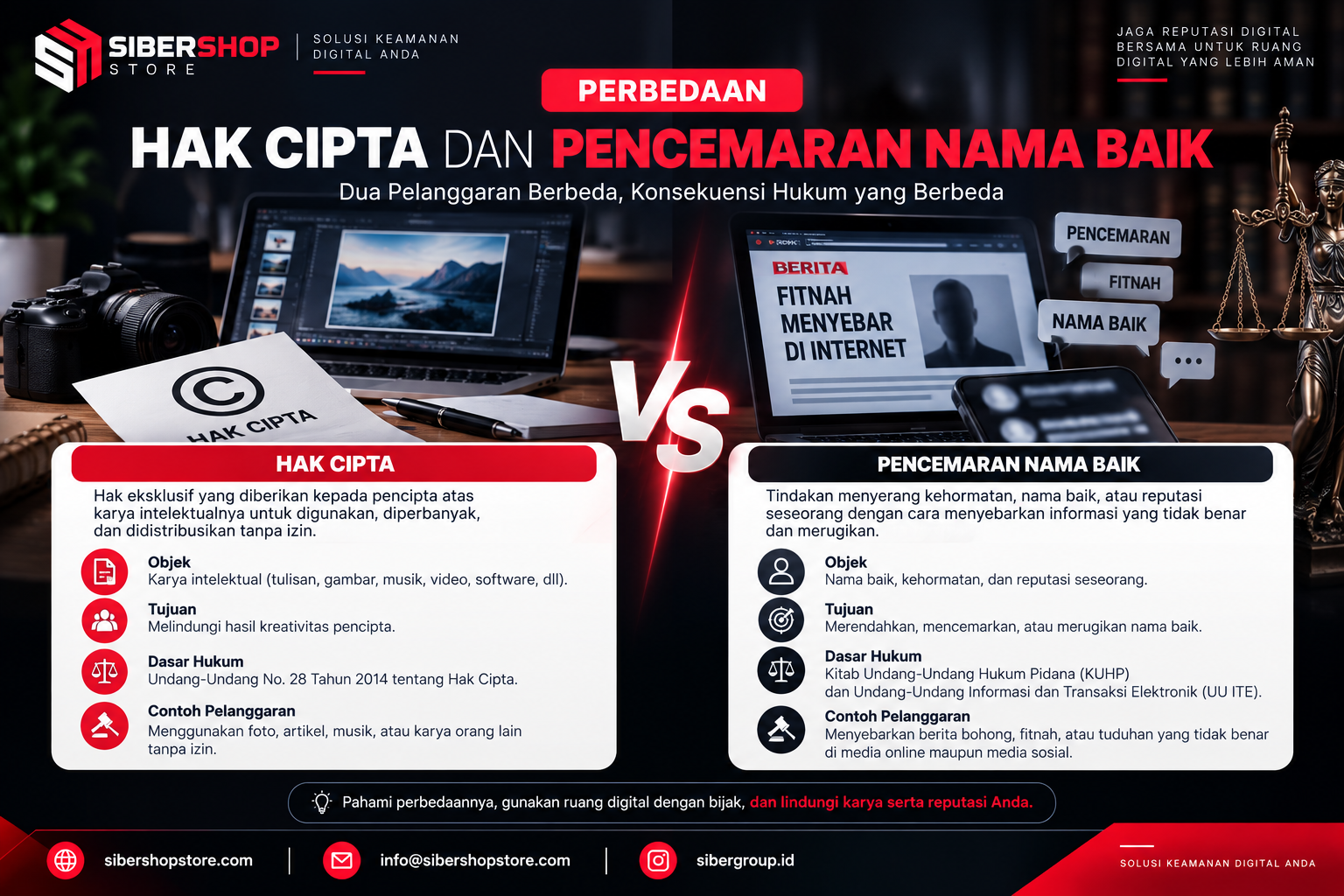
Understanding the Difference Between Copyright and Defamation in the Digital World
In the digital realm, many people often confuse two legal issues that are actually distinct: copyright infringement and defamation. While both can serve as grounds for legal action, the protected subject matter, the legal basis applied, and the resolution mechanisms differ significantly. A misunderstanding of these two issues often leads people to take the wrong steps when seeking legal action against content that harms them.
This misunderstanding occurs more and more frequently because these two types of violations often appear together in a single case. For example, when a person’s private photo is used without permission and accompanied by a derogatory caption, two distinct issues are occurring simultaneously: the unauthorized use of the work and defamation through the accompanying caption.
What Is Protected by Copyright
Copyright essentially protects a person’s creative works—such as photos, writings, videos, music, or other creative works—from unauthorized use by others. The object of protection here is the work itself, not the creator’s reputation or good name. When someone takes a photo belonging to another person and uses it without permission—even without any negative narrative—that action can still be categorized as a copyright infringement because the creator’s exclusive rights to their work have been violated.
Copyright cases are typically resolved by filing a report with the platform where the content was uploaded, requesting removal based on a claim of ownership of the work, or, in certain cases, through civil or criminal legal channels in accordance with applicable regulations. Proof of original ownership of the work is a key element in this process, whether in the form of the original file, metadata, or a history of previous publications.
What Is Protected in Defamation
Unlike copyright, defamation relates to the protection of a person’s honor and reputation. This issue arises when a party disseminates information, allegations, or narratives that damage another person’s reputation, regardless of whether the content used is an original work owned by the disseminator or not. The primary focus is not on who owns the content, but rather on the impact of the narrative on the reputation of the aggrieved party.
Resolving defamation cases generally requires a longer process than copyright infringement cases, as it must be proven that there was intent, that harm was caused, and that the information disseminated was false. Common courses of action include sending a cease-and-desist letter to the relevant party, filing a report with the platform, and pursuing criminal or civil legal proceedings depending on the severity of the case.
Why It’s Important to Understand This Difference
Understanding this distinction is important because the strategies for addressing these two types of violations differ. Copyright cases are typically resolved more quickly through digital platforms’ content reporting mechanisms, as most major platforms already have standardized ownership claim systems in place. Meanwhile, defamation cases require a more cautious approach because they intersect with freedom of expression and press independence, especially if the content originates from the mass media.
Mistakes in identifying the type of infringement can prolong the resolution process or even cause it to miss the mark. For example, filing a copyright claim for content that is actually a defamation issue will not resolve the root of the problem, as the platform will only assess the ownership of the work, not the reputational impact it causes.
When These Two Issues Can Occur Simultaneously
In practice, it is not uncommon for a single case to involve both copyright infringement and defamation. An example is when a person’s private photo is taken without permission and then accompanied by a narrative that accuses or demeans the person in the photo. In such situations, the issues must be addressed in parallel: filing a copyright claim regarding the unauthorized use of the photo, while simultaneously pursuing separate legal action for the defamation contained in the accompanying narrative.
This combined approach requires careful planning from the outset to ensure that each resolution pathway is grounded in the appropriate legal basis and does not overlap with the other. A clear understanding of these two concepts is essential for anyone seeking to effectively protect themselves in the digital realm.
Contact Us
Identifying the correct type of infringement is the first step in determining the effectiveness of resolving a case in the digital realm. A team experienced in handling both copyright and defamation issues can help accurately assess the case and determine the most appropriate resolution path.
Contact Us through our official channels.