When a Company’s Name Is Used to Trap Job Seekers
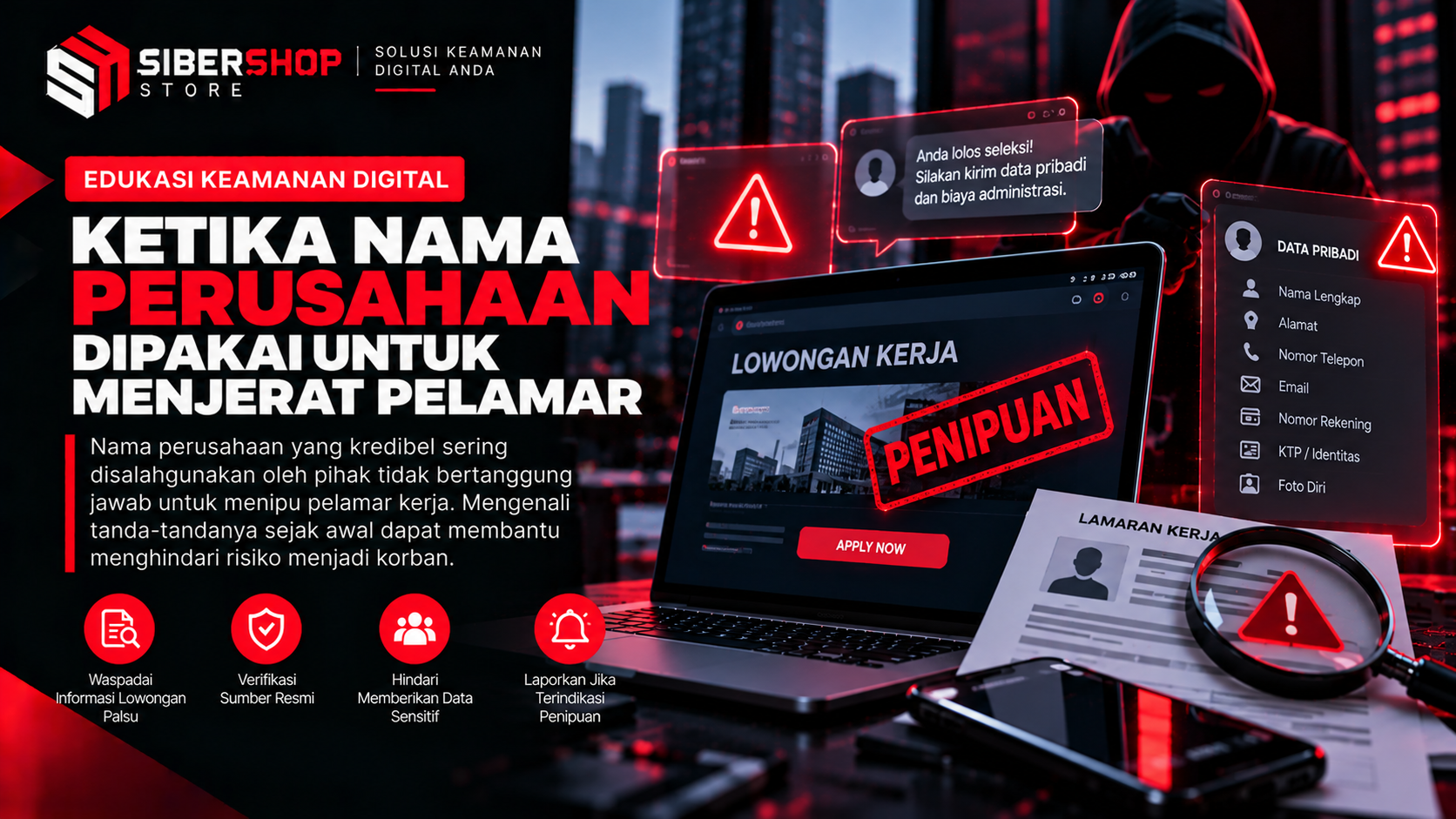
Fake job postings are no longer just a problem for careless job seekers. On the other side of the screen, there are companies whose names, logos, and recruitment team identities are borrowed without permission to convince potential victims. Deceived applicants rarely blame the perpetrators they don’t know; instead, they direct their frustration toward the company name listed in the ad. This article addresses the issue from the perspective of companies whose names are misused, covering everything from common patterns to professional handling through official reporting channels and legal action.
The pattern of misuse typically begins with job postings that copy the original company’s job descriptions, logos, and writing style. These ads are posted on social media, job platforms, or shared through messaging app groups to appear legitimate and spread quickly. Perpetrators also frequently create recruitment accounts that mimic official ones, complete with nearly identical names and profile photos taken from the company’s materials. There are also messages from fake recruiters sent directly to potential applicants, claiming to be human resources staff and inviting them to communicate outside official channels. In later stages, victims are usually asked to submit personal data, pay certain fees, or participate in a selection process that does not exist at the actual company. Companies often only find out about this after applicants contact them or complain publicly.
Impact on the Company’s Reputation as an Employer
The first impact falls on the applicants who become victims, both financially and because their personal data has fallen into the hands of irresponsible parties. The second impact follows when public complaints point to the company’s name, as victims openly share their experiences in online public forums, mentioning the names they saw in the ads. Such posts are easily seen by other prospective applicants, business partners, and even the media. Without a clear clarification, the company appears negligent or may even be perceived as complicit in the scam.
A longer-term impact that is harder to measure is a decline in trust in the official recruitment process. Applicants who have been victims or heard such stories tend to be suspicious of genuine job postings, leading them to ignore even legitimate interview invitations. The human resources team ends up spending time answering verification questions and addressing concerns, even though the root of the problem lies beyond their control. A reputation as an employer built over many years can be eroded by a single widely circulated fake job posting. Therefore, this issue deserves to be treated as part of brand protection, not merely a temporary nuisance.
Evidence and Ownership Verification as the Basis for Reporting
Effective handling begins with clear evidence and a solid foundation of ownership. Every finding must be fully documented, including links, screenshots, the time of discovery, the account name, and any messages received by applicants, if available. On the company’s side, verification of ownership of the name and brand must be prepared, such as proof of trademark registration, business entity legal status, and indicators of the actual official channel. These documents are required because platforms generally ask the reporter to demonstrate that they have the right to the name or identity being misused. Reporters also need to distinguish verified facts from mere allegations, so that reports remain focused and can be assessed objectively. The personal data of applicants who are victims should only be referenced as necessary and handled with care.
Siber Group’s Handling Process
Siber Group handles these cases through a systematic workflow. The first stage is identifying the scope of the misuse—that is, mapping where the company’s name is being used, ranging from advertisements and accounts to the contact numbers used to reach the complainant. The second stage is reporting the abuse to the respective platforms through their official channels, with evidence and proof of ownership already prepared. The final decision regarding content removal remains with the platform, so the outcome cannot be guaranteed, and the duration of the process may vary by channel. Siber Group acts as a guide throughout the reporting process; the final outcome depends entirely on the platform’s decision, and we do not guarantee the removal of specific content. Each report is documented so that its progress can be reviewed together with the company.
If the spread is widespread or the victim’s losses are sufficiently serious, legal action may be recommended and explored together with the company’s legal counsel. This step includes compiling a timeline and preparing evidence ready for use, as well as coordinating with the company’s legal counsel regarding the most appropriate course of action. It is important to understand that pursuing legal action depends on the facts of the case and the assessment of the authorities; therefore, not all cases need to be taken to court. Following the initial response, Siber Group monitors for the reappearance of the perpetrator, as they often create new accounts or ads with slightly altered names. This monitoring helps the company react more quickly before new victims emerge.
Strengthening Official Recruitment Channels
Beyond enforcement actions, companies need to strengthen their official recruitment channels so that applicants have a reliable guide for distinguishing between genuine and fake information. The basic step is to designate a single official career page on the company’s website as the primary reference, complete with a list of legitimate accounts and email addresses. A clear statement that the official recruitment process does not charge applicants any fees is also helpful—if this applies to the company—and should be confirmed with the company beforehand to ensure it aligns with their recruitment practices. This information should be repeated in social media posts and in every selection invitation so that anyone with doubts can easily find it.
Clear communication channels also simplify the reporting process, as suspicious applicants know where to turn for answers. The human resources team can prepare standard responses to verification questions so that replies are prompt and consistent. In this way, the company not only responds to misuse but also fosters a public habit of verifying sources before trusting them. Applicants’ trust is an asset worth safeguarding just as seriously as the brand itself. A calm and well-documented response is ultimately more convincing than a hasty denial.
Contact Us
Contact us through Siber Group’s official channels at sibershopstore.com, email [email protected], Instagram @sibergroup.id, or WhatsApp 085117758048.